The Essence and Origin of Cigars
Definition: Hand-rolled entirely from fermented tobacco leaves with no additives. Its core value lies in the inherent flavor of the tobacco itself and the craftsmanship of the fermentation process.
Origin: Derived from the indigenous peoples of the Americas, it was introduced to Europe in the 16th century and became a social symbol of the aristocracy. The modern cigar industry is concentrated in regions such as Cuba, the Dominican Republic, and Nicaragua.
Key Distinction: Fundamental differences from cigarettes in raw materials, craftsmanship and core value.
Core Composition of a Cigar
Three-layer Structure
- Wrapper: The outermost layer, determining the appearance and 30% of the cigar’s flavor. Common hues include Claro (pale gold) and Maduro (deep brown).
- Binder: The middle layer that secures the filler and influences the evenness of the cigar’s burn.
- Filler: The core layer, blended from multiple varieties of tobacco, which dictates 70% of the cigar’s flavor. Classified into Long Filler and Short Filler.
Common Sizes
- Robusto: 50 ring gauge × 5 inches
- Corona: 42 ring gauge × 5.5 inches
- Churchill: 47 ring gauge × 7 inches
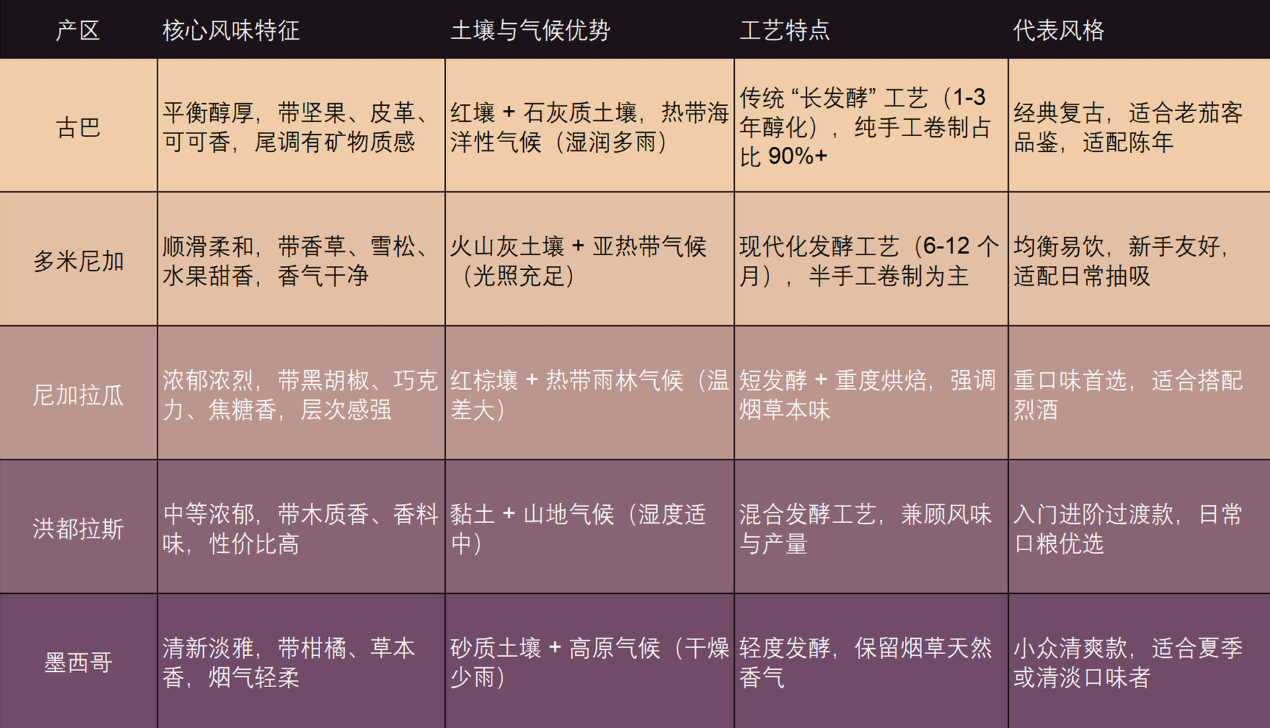
Key Differences Among the World’s Core Cigar-producing Regions